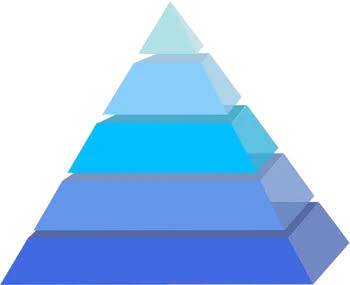

-C-: Tiering System for Intelligence Scaling / SCD Matchups
The idea behind -C- is to create something similar to power-scaling tiers, such as Wall Level, Building Level, Hill Level, etc. However, instead of measuring destructive power, these tiers would determine whether two characters can even be fairly compared in an intelligence-scaling matchup in the first place.
In powerscaling, a Hill Level character at their maximum might be able to defeat a Wall Level character at their maximum (terms and conditions applied). However, in intelligence scaling, the purpose of these tiers would be different. They would simply indicate whether Character X can reasonably be matched against Character Y, or vice versa.
The Problem With Normal Matchups
Take two characters like Kenjaku and Akiyama.
A normal VS matchup might look something like this:
Meth: Akiyama claps Kenjaku due to XYZ reasons.
Normal: Kenjaku would destroy Akiyama, even in Liar Game 💀, due to XYZ reasons.
However, there's a flaw here: both characters operate at radically different levels, and we have no solid idea how they would perform against each other in different environments.
Kenjaku is constantly shown manipulating entire societies and carrying out schemes spanning years. Meanwhile, Akiyama is primarily shown operating within Liar Game, where he manipulates the games themselves and outsmarts his opponents.
If you put Akiyama in JJK, even if you give him knowledge of curses, it's still difficult to determine how he would perform against Kenjaku, who can utilize virtually everything at his disposal against him.
The same applies to Kenjaku. Putting him in Liar Game raises different questions. Can he adapt to the rules and systems of Liar Game? Would he know how to exploit the game's mechanics like Akiyama does? Or would he fumble because he isn't built for that level of system-based environment?
The problem isn't necessarily who is smarter. The problem is whether their respective levels of operation allow for a meaningful comparison in the first place.
This might look like I'm suggesting some kind of dimensional scaling, but not really. Improve your reading, because you're wrong as hell if that's what you think I'm proposing.
What I'm Actually Suggesting ,This is an intelligence-scaling framework designed to determine whether two characters' levels of operation overlap enough for them to be meaningfully compared.
I'm not saying that a Tier 2: Local-Global Systems character would automatically beat a Tier 1 character. That's not the point.
The point is that different systems of operation can function so radically differently that we can only speculate about how a character would perform in an unfamiliar environment. We might not have enough evidence to conduct a detailed, meaningful discussion about the matchup.